Heritage

The name is a place.

Fly is a village in Normandy, first written down in 864. Eleven centuries later the name is on a road sign in Brentwood, Tennessee, and on this firm.

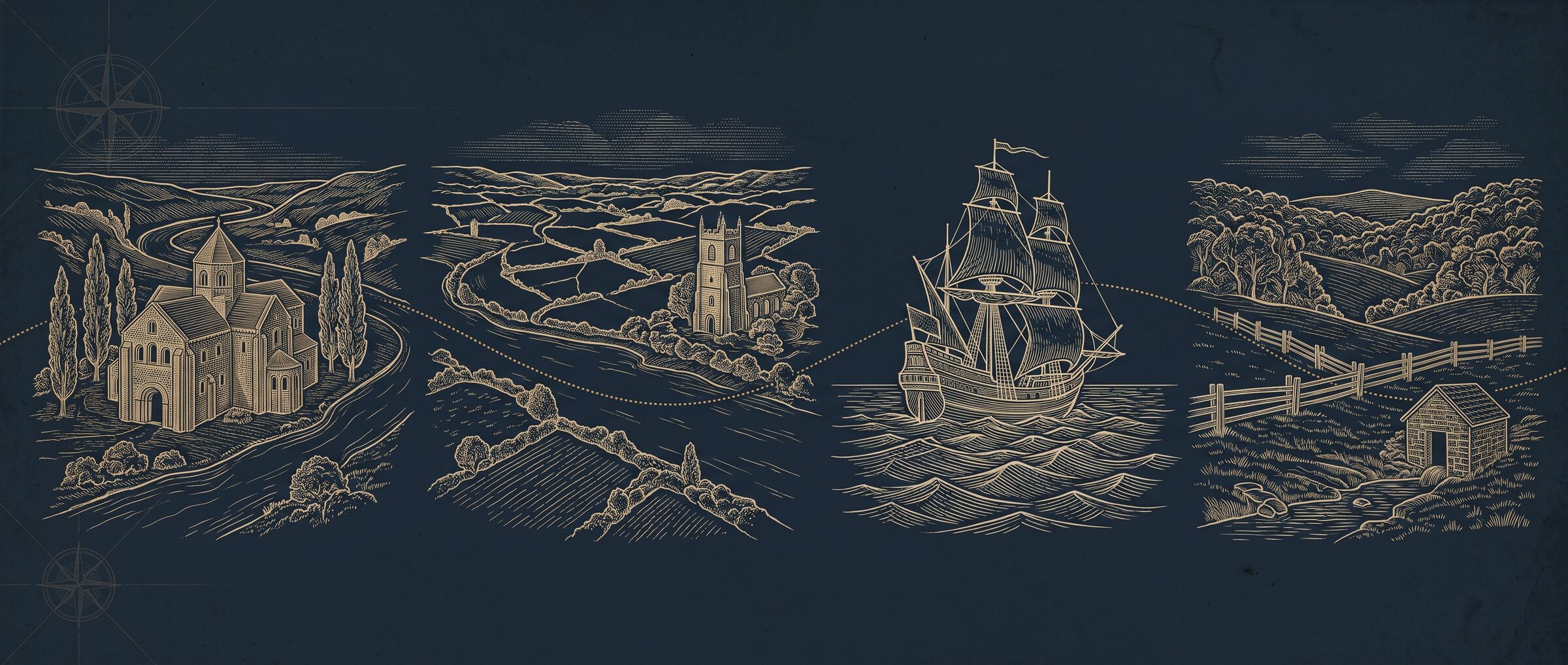
Engraved panorama joining four scenes with one route line: a Norman abbey, English common fields, a square-rigged ship at sea, and the wooded hills of Tennessee
  1. 864A place called Fly
  2. 1198de Flagie, Normandy
  3. 1637Virginia
  4. 1796Tennessee
The chronicle

An eleven-century journey.

864

A place called Fly

The name begins as ground, not as a family: Flaviacum, later Fly, a village above the valley of the Epte in Normandy. Northmen under Rollo razed its abbey around 902. The abbey of Saint-Germer-de-Fly was rebuilt, and it still stands. So does the village.
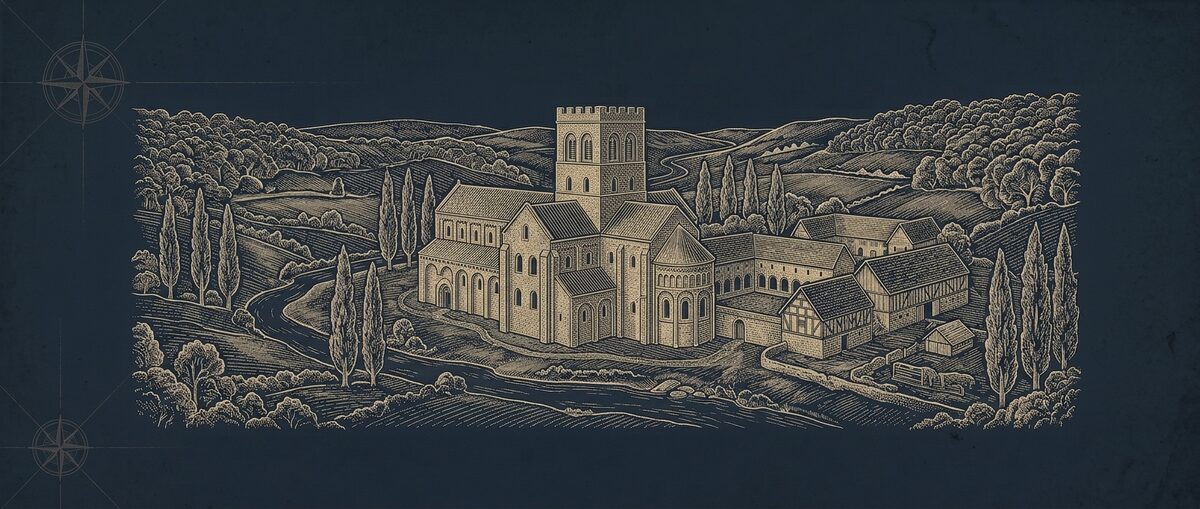
Engraved vignette of a Romanesque Norman abbey among poplars in a river valley
1198

The name takes to people

A clerk of the Norman Exchequer records a payment against the name of Richard de Flagie. From here the name moves the way names move: carried, respelled, written down by strangers. Flagie becomes Flie, then Flye, then Fly.

1272

England

Three bearers of the name, Oda, Ralph, and Roger Flie, stand in the English Hundred Rolls. Records this old prove presence and nothing more.

1555

Yeomen of Middlesex

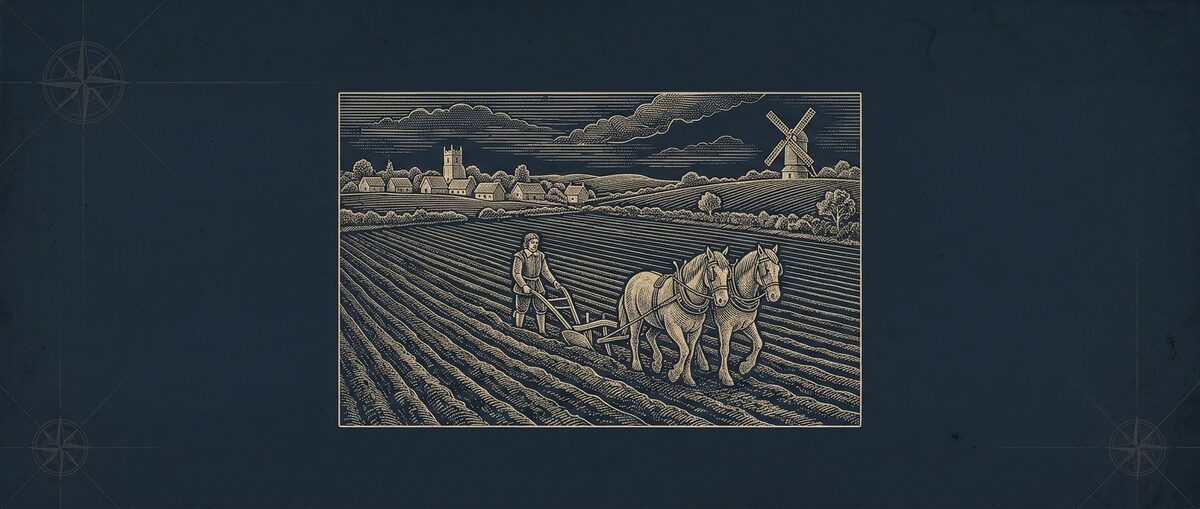
West of London the family comes into focus: wills at Hillingdon in 1555 and Stanwell in 1622, husbandmen and yeomen working the common fields. Two customs repeat across the generations. The plough team goes to the eldest son, and there is a clause for the parish poor.

Engraved vignette of a plough team working long open field strips, a village church and windmill beyond
1637

The crossing

John Flye lands in Virginia, entered in the Virginia Patent Book on 22 August 1637. The English trail points to a Stanwell yeoman's son who vanishes from every Middlesex record at the same moment. That link is strong evidence, not proof, and the search continues in the London archives.

Engraved vignette of a seventeenth-century square-rigged ship approaching a wooded shoreline
1679

Twelve generations begin

William Fly of Isle of Wight County, Virginia leaves a deathbed will and an inventory: one horse, three cows, five shoats, a gun, pewter, and two feather beds. From him to the present day, the American line is documented at every generation.

1796

Tennessee

Rev. John Fly settles Middle Tennessee. In 1813 his son Lawrence signs the Creek War muster declaration with his mark and carries a musket to Fayetteville.

1800s

Brentwood

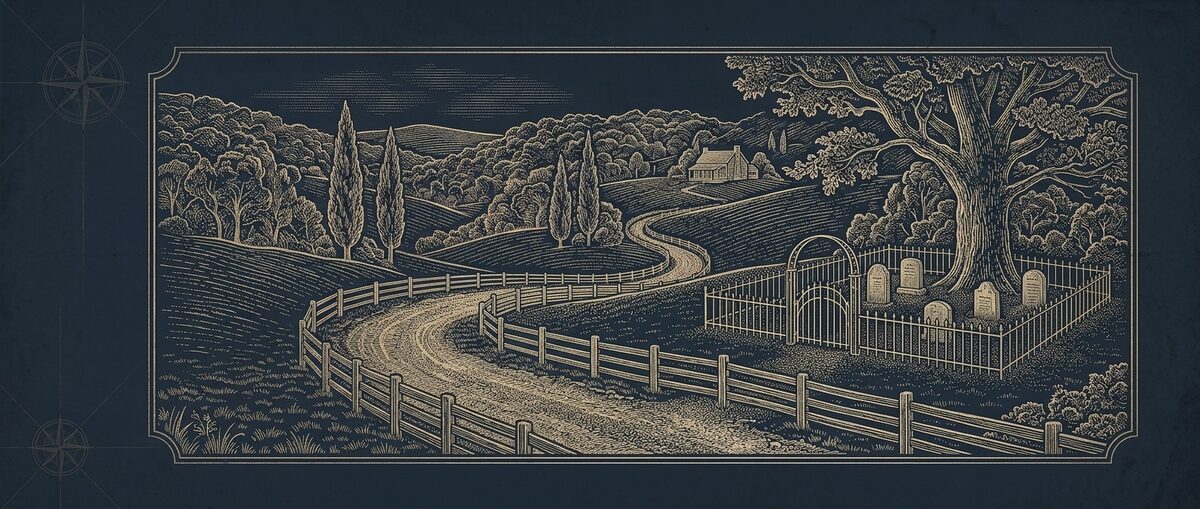
Sterling Brown Fly farms Williamson County. The family cemetery where he rests is still kept, and a relative still holds the key. Fly Road still carries the name on the Brentwood map.

Engraved vignette of Tennessee hills, a split-rail fence along a country road, and a small family cemetery under an old tree
1900s

The judge

Jeremiah Moore Fly Jr., known as Judge Jerry, carries the line through a new century, 1897 to 1955.

Today

Readyville

Dr. John Brown Fly III works from Readyville, Tennessee, the twelfth documented American generation, with his son Gabe. Still makers: software and systems, writing, forged steel.

The marks

The same X, two continents apart.

Thomas of Stanwell signed his will with a mark in 1622. Lawrence of Williamson County signed his the same way in 1855, two hundred and thirty three years later. The first signature in the family record is "Tho: fflye," written by a Hillingdon wheelwright in 1643.

Close view of hand-forged Damascus steel, its layered pattern lit in warm gold against dark blue shadow
Makers

The trade changes. The habit does not.

Husbandmen and yeomen. A wheelwright. Pewterers of London. A draper. A currier. Today it is software, writing, and Damascus steel forged by hand.

Strength in the joining

The family motto. It has held at every joint of the record that has been tested.

Now

The work carries the name forward.